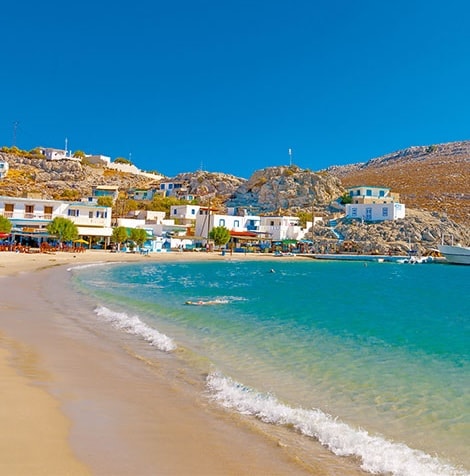

Karpathos is the island that surprises people. They arrive expecting a quiet Dodecanese backwater and find instead a place of extraordinary variety: dramatic mountain scenery, world-class windsurfing, beaches that rival anything in Greece, and a village in the north where traditional dress, dialect and customs have survived largely intact. It is one of the most rewarding islands in the Aegean.
The Island
Karpathos is the second-largest island in the Dodecanese, sitting between Rhodes and Crete. It is long and narrow, divided by a spine of mountains that reaches over 1,200 metres, and it has two distinct characters: the relatively accessible south, centred on the capital Pigadia, and the remote, traditional north, accessible only by boat or a rough mountain road.
The island has avoided the mass tourism that has transformed parts of Rhodes and Kos, partly because of its relative inaccessibility and partly because its character resists easy packaging.
Sights and Attractions
Olympos is the island's most extraordinary sight — a remote mountain village in the north where women still wear traditional embroidered dress as everyday clothing, where windmills still grind grain and where a dialect closer to ancient Greek than modern is spoken. It is not a museum piece or a performance: it is a living community that has simply maintained its traditions. Getting there — by boat from Pigadia to Diafani, then by road — is part of the experience.
The Byzantine church of Agios Nikolaos near Spoa has remarkable frescoes. The archaeological site at Arkasa has Mycenaean and early Christian remains with extraordinary sea views.
Beaches
Karpathos has beaches of exceptional quality. Apella is widely considered one of the finest in Greece — a dramatic arc of white pebble and turquoise water backed by pine-covered cliffs, accessible only on foot or by boat. Kyra Panagia is similarly spectacular. Ahata and Lefkos are more accessible and equally beautiful. Afiarti in the south is the windsurfing hub — consistently strong winds and a long sandy beach.
Eating and Drinking
Pigadia has a good range of tavernas and restaurants. Amoopi and Lefkos have excellent waterfront options. Local specialities include makarounes (handmade pasta with onions and cheese), fresh fish and local honey. The wine from the island's small producers is worth seeking out.
Weather
Hot and dry in summer (July–August at 30–34°C), with strong meltemi winds in the north that make it a windsurfing paradise. The south is more sheltered. The sea is swimmable from May through October.
How to Get There
Karpathos has its own airport with direct flights from several UK airports in summer, and connections via Athens year-round. Ferries run from Piraeus (Athens) and Rhodes, though the journey is long — flying is the practical choice for most visitors.
Best For
Karpathos suits adventurous travellers who want variety, windsurfers and water sports enthusiasts, culture lovers drawn to Olympos, beach lovers who want quality without crowds, and anyone who wants the Dodecanese beyond Rhodes. It rewards those who stay at least five or six nights.
Thinking about Karpathos? Talk to us — we know the island well and can build an itinerary that takes in Olympos, Apella and the best of the south.

Written by
The Greeko Team
Greeko has been crafting bespoke Greek holidays for over 25 years. Every article is written from genuine first-hand knowledge of the islands, the culture, and the experiences that make Greece extraordinary.