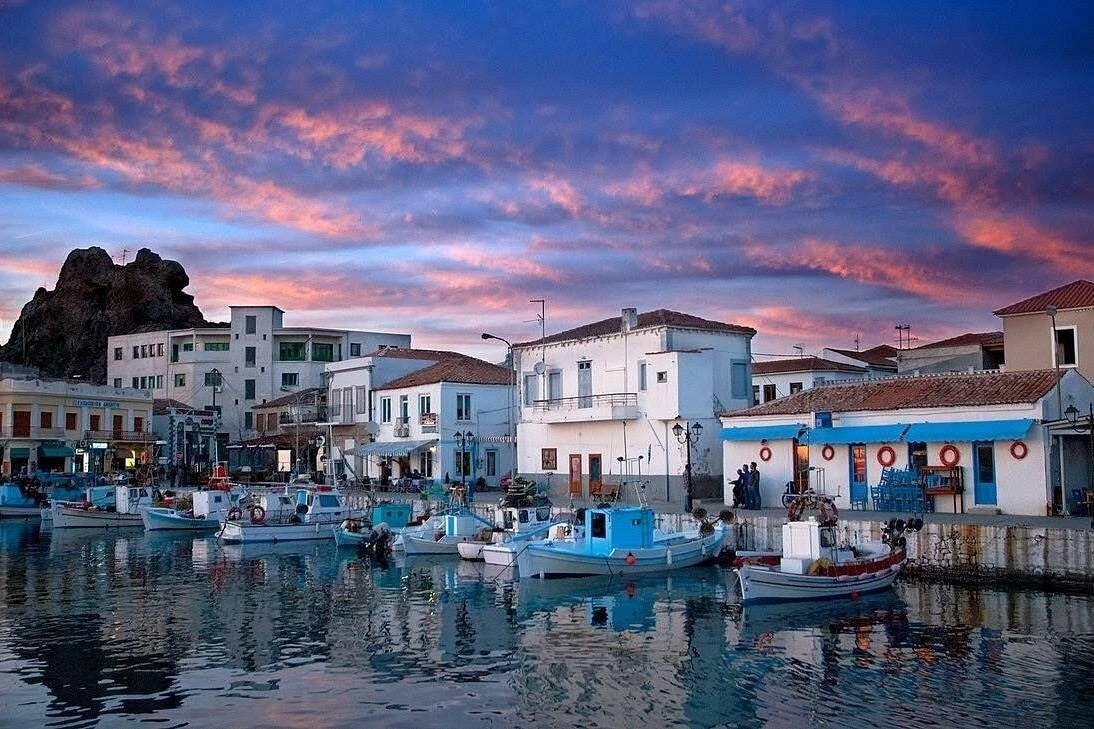

The Peloponnese is the great peninsula of southern Greece — a vast, varied landscape of ancient ruins, Byzantine cities, Venetian harbours, dramatic mountain ranges and wild coastlines. It is the most historically rich region in Greece, and one of the most rewarding to explore.
The Region
The Peloponnese covers around 21,500 square kilometres and is connected to the rest of mainland Greece by the narrow Isthmus of Corinth (now crossed by a canal). The landscape is extraordinarily varied: the fertile plains of Argolis in the northeast, the dramatic Taygetos mountain range in the centre, the wild Mani peninsula in the south, the olive groves of Messinia in the southwest and the long coastlines of the Argolic and Laconian gulfs.
Ancient Sites
The Peloponnese contains some of the most important ancient sites in the world. Ancient Olympia in the northwest is the birthplace of the Olympic Games — the sanctuary of Zeus, the ancient stadium and the excellent museum make it one of the most moving archaeological experiences in Greece. Mycenae in the northeast is the citadel of Agamemnon — the Lion Gate, the Treasury of Atreus and the grave circles are among the most powerful ancient monuments in Europe. Epidaurus has the best-preserved ancient theatre in Greece, with extraordinary acoustics still used for performances today. Ancient Corinth and the towering Acrocorinth fortress guard the entrance to the peninsula.
Byzantine and Medieval Sites
Mystras near Sparta is one of the most extraordinary sites in Greece — a ruined Byzantine city on a hillside, with churches, palaces and monasteries dating from the 13th to 15th centuries. It is a UNESCO World Heritage Site and one of the most atmospheric places in the country. Monemvasia on the east coast is a medieval fortress city on a rock connected to the mainland by a causeway — its Byzantine and Venetian buildings are extraordinarily well preserved.
Nafplio
Nafplio is the most beautiful town in the Peloponnese — a Venetian harbour town of neoclassical mansions, cobbled lanes and the magnificent Palamidi Fortress above. It was the first capital of independent Greece, and it retains an elegance and sophistication that makes it one of the finest bases for exploring the region.
The Mani Peninsula
The Mani is the wildest and most dramatic part of the Peloponnese — a barren, rocky peninsula of tower houses, Byzantine churches, sea caves and a fierce, independent spirit. The Deep Mani (Exo Mani) around Areopoli and Gythio is the most accessible; the Inner Mani (Mesa Mani) around Gerolimenas is wilder and more remote.
Beaches
The Peloponnese has excellent beaches. Voidokilia near Pylos is one of the finest in Greece — a perfect horseshoe of sand and clear water. Stoupa in the Mani is a beautiful sandy beach with good facilities. Elafonisos (a small island off the south coast) has the extraordinary Simos beach — a double lagoon of white sand and turquoise water.
Eating and Drinking
The food in the Peloponnese is exceptional — the region is famous for its olive oil (among the finest in Greece), its figs, oranges, wine (particularly from Nemea) and its honey. Eat at the tavernas in Nafplio for the best traditional cuisine; visit the villages of the Mani for grilled meat and local cheese.
How to Get There
The Peloponnese is easily reached by road from Athens (around 2 hours to Corinth, 3 hours to Nafplio). Kalamata has an airport with seasonal international flights. The region is best explored by car.
Best For
The Peloponnese suits travellers who want to understand Greece at its deepest — those who are interested in ancient history, Byzantine art, medieval architecture and wild landscapes. It is one of the most rewarding destinations in Europe for those willing to explore beyond the obvious.
Thinking about the Peloponnese? Talk to us — we can build a bespoke itinerary that takes in the ancient sites, the Byzantine cities and the wild beauty of the Mani.

Written by
The Greeko Team
Greeko has been crafting bespoke Greek holidays for over 25 years. Every article is written from genuine first-hand knowledge of the islands, the culture, and the experiences that make Greece extraordinary.