Psara is not an island you stumble upon. It takes effort to reach — a long ferry crossing from Chios or the mainland — and that effort is precisely the point. What awaits is one of the most unspoilt, historically resonant and quietly beautiful islands in the entire Aegean: a place where the silence is profound, the water is extraordinary and the weight of Greek history is felt in every stone.
The Island
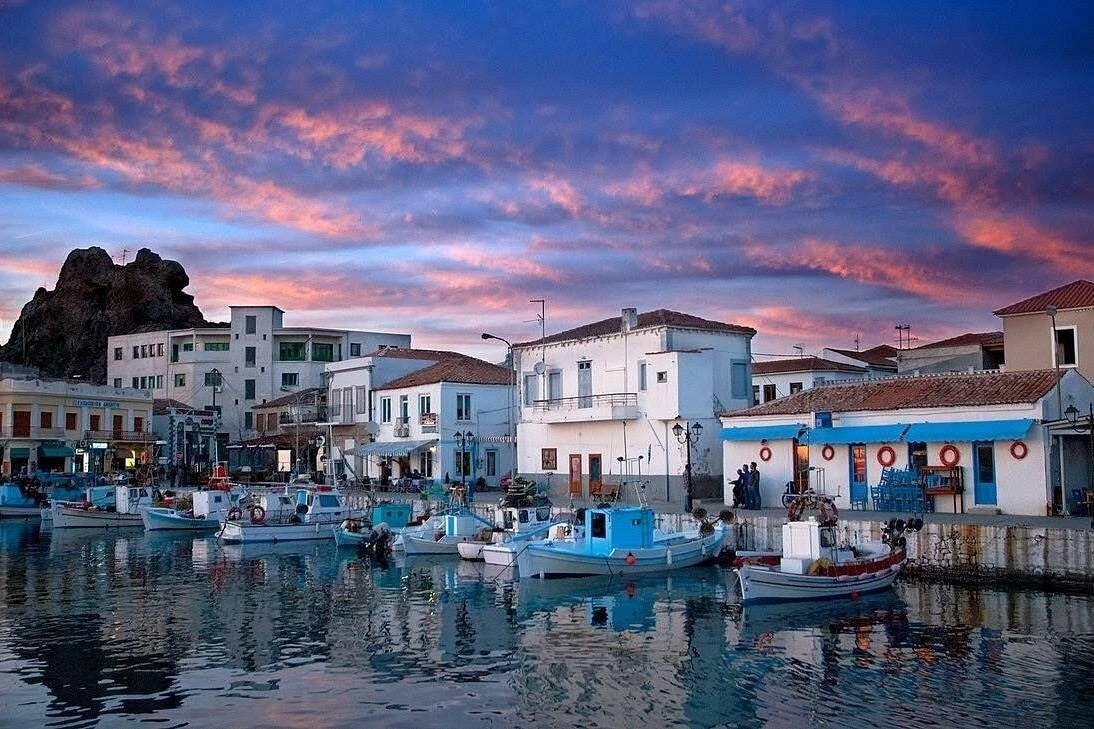
Psara is a small island in the North Aegean, lying around 20 kilometres west of Chios. It covers just 45 square kilometres and has a permanent population of only a few hundred people. The landscape is rugged and largely treeless — the result of a catastrophic Ottoman assault in 1824 that destroyed the island and drove most of its population into exile. What remains is a place of stark, elemental beauty: rocky hills, wild coastline and a single village of whitewashed houses clustered around a small harbour.
History and Significance
Psara holds a place of extraordinary importance in Greek history. In the early 19th century, before the War of Independence, it was one of the most prosperous maritime islands in the Aegean — its merchant fleet was among the largest in Greece, and its sailors were among the most skilled. When the revolution broke out in 1821, Psara threw itself into the struggle with extraordinary courage, its ships and crews playing a decisive role in the naval campaigns of the war.
The Ottoman response was devastating. In June 1824, a massive fleet descended on the island, massacring or enslaving most of the population and burning everything to the ground. The Greek poet Dionysios Solomos — who also wrote the national anthem — immortalised the destruction in a famous poem: "On the blackened ridge of Psara, Glory walks alone..."
The island was slowly resettled after independence, but it never recovered its former prosperity. Today, that history gives Psara a particular gravity — a sense that the ground itself remembers what happened here.
Beaches
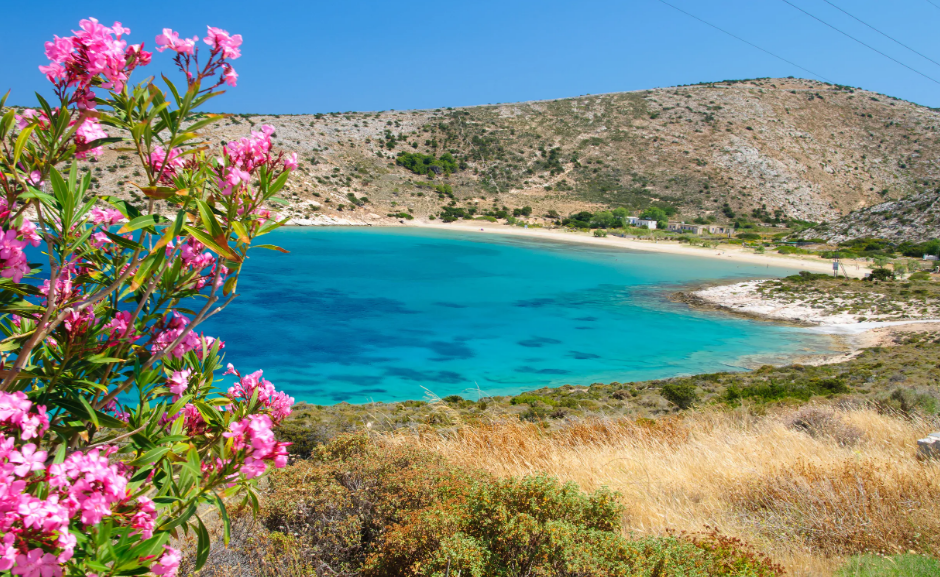
Despite its small size, Psara has beaches of remarkable beauty. Lazaretto near the village is the most accessible — a crescent of pale sand and turquoise water that is genuinely stunning. Katsounis on the north coast is wilder and more dramatic, with deep blue water and a complete absence of facilities. Limnos on the south coast is a long, sheltered bay with clear, shallow water ideal for swimming. The beaches here are among the cleanest and least-visited in the North Aegean — the reward for making the journey.
The Village
The single settlement — simply called Psara — is a charming, unhurried place. The harbour front has a handful of tavernas and cafés; the lanes behind are quiet and whitewashed. The Church of the Assumption contains icons rescued from the 1824 destruction. The small local museum tells the story of the island's maritime history and the events of the war with dignity and care.
Eating and Drinking
The tavernas in Psara serve simple, excellent food — fresh fish landed that morning, local cheese, grilled octopus and the kind of honest Greek cooking that has almost disappeared from more visited islands. There is no pretension here, and no need for it.
How to Get There
Psara is reached by ferry from Chios (around 3–4 hours) and from Lavrio on the Attica coast. Connections are less frequent than on larger islands — typically a few times a week — so planning ahead is essential. The journey itself, across open Aegean water, is part of the experience.
Best For
Psara is for travellers who want something genuinely different — those who value history, solitude and natural beauty over facilities and nightlife. It is one of the few places in Greece where you can still feel entirely alone on a beautiful beach, eat at a taverna where the owner caught the fish that morning, and sit in the evening silence with a sense that you have found something most people will never find.
Thinking about Psara? Talk to us — we can combine it with Chios and Lesbos for an unforgettable North Aegean journey.

Written by
The Greeko Team
Greeko has been crafting bespoke Greek holidays for over 25 years. Every article is written from genuine first-hand knowledge of the islands, the culture, and the experiences that make Greece extraordinary.