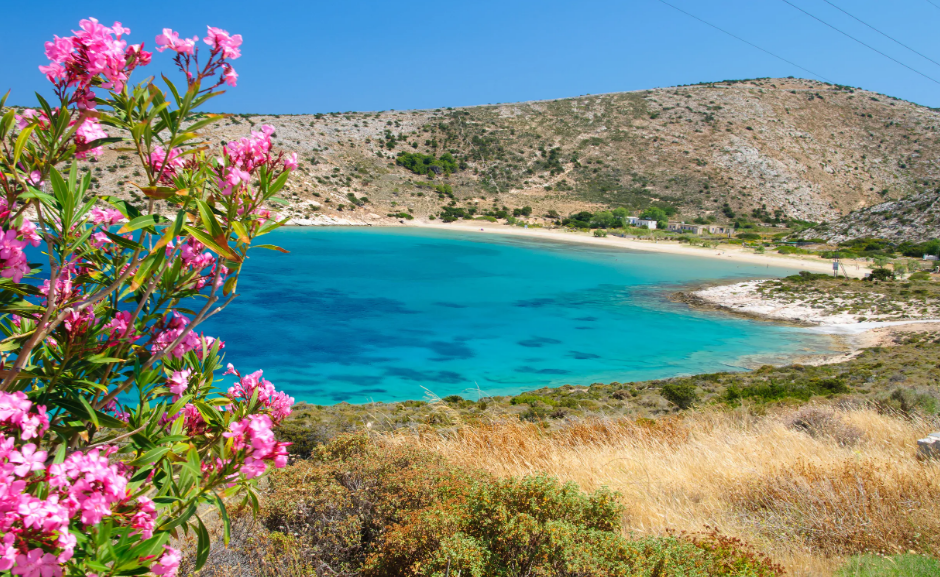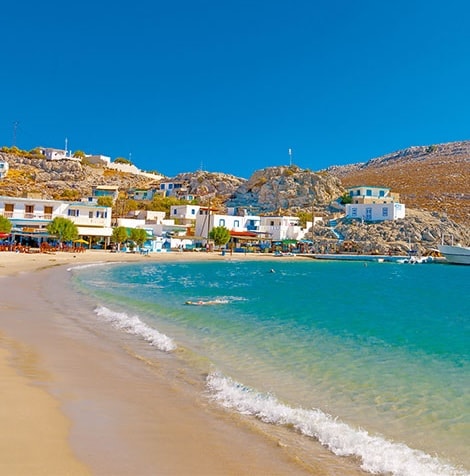

Astypalaia occupies a curious position — geographically it sits between the Cyclades and the Dodecanese, and administratively it belongs to the latter, but in character it feels like neither. It is its own thing entirely: a butterfly-shaped island of extraordinary beauty with a pace of life that has barely changed in decades.
The Island
The island's distinctive shape — two wings connected by a narrow isthmus — gives it an unusually varied landscape. The western wing is more mountainous and dramatic; the eastern wing flatter and more agricultural. The main settlement, Chora, sits on a hill above the port of Pera Gialos, crowned by a magnificent Venetian castle.
Astypalaia is not easy to reach, and that is part of its appeal. The journey filters out casual visitors and leaves an island that feels genuinely undiscovered.
Sights and Attractions
The Venetian Castle (Kastro) is one of the finest in the Aegean. Built by the Quirini family in the 13th century, it contains two Byzantine churches and offers panoramic views over the island and sea. The whitewashed houses of Chora cluster around its base, their blue doors and bougainvillea creating one of the most photogenic streetscapes in Greece.
The Archaeological Museum in Chora holds an impressive collection of finds from the island's ancient past, including objects from the prehistoric settlement at Armenochori.
Beaches
Astypalaia has some exceptional beaches. Livadi is the most popular — a long sandy bay within walking distance of Chora. Agios Konstantinos and Vatses on the western wing are wilder and more remote. The small islets off the eastern wing — Koutsomytis, Syrna and others — can be reached by boat and offer extraordinary snorkelling in crystal-clear water.
Eating and Drinking
The tavernas in Chora and at the port serve excellent local food. Akrogiali at the port is the place for fresh fish; Barbarossa in Chora is a local institution for mezedes and local wine. The island produces its own honey, cheese and sausages — look for them in the small shops in Chora.
How to Get There
Astypalaia has a small airport with seasonal flights from Athens. By sea, it is served by ferry from Piraeus (around 10–12 hours) and connects to Rhodes, Kos and other Dodecanese islands. The journey is long but the arrival — sailing into the harbour with the castle above — is one of the great arrivals in Greece.
Best For
Astypalaia suits travellers who want a genuine escape — those who appreciate beauty without infrastructure, who are happy to hire a scooter and explore, and who find the absence of crowds a feature rather than a drawback. It is one of the most rewarding islands in Greece for those willing to make the journey.
Thinking about Astypalaia? Talk to us — we can weave it into a Dodecanese itinerary that takes in the less-visited islands.

Written by
The Greeko Team
Greeko has been crafting bespoke Greek holidays for over 25 years. Every article is written from genuine first-hand knowledge of the islands, the culture, and the experiences that make Greece extraordinary.