Paxos and Anti-Paxos: The Ionian Islands' Best-Kept Secret
Olive groves to the water's edge, three perfect harbour villages, sea caves of extraordinary beauty — and just across the channel, the turquoise lagoons of Anti-Paxos. Paxos is the Ionian at its most intimate.


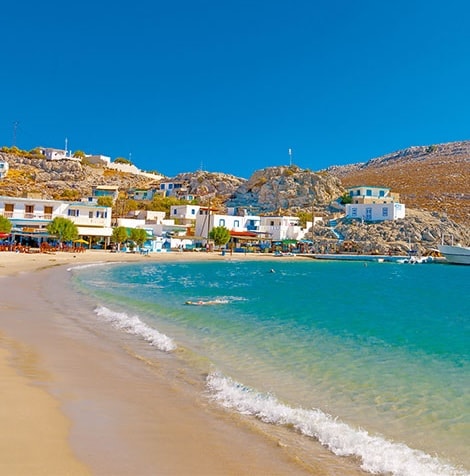
Paxos is the smallest of the main Ionian islands and, many would argue, the most beautiful. It is tiny — just 10 kilometres long — and almost entirely covered in ancient olive groves that run right to the water's edge. There are no big resorts, no package holiday hotels, no beach clubs. There are three perfect harbour villages, a coastline of sea caves and turquoise coves, and — just two nautical miles to the south — the extraordinary lagoons of Anti-Paxos.
Paxos: The Island
Paxos has three main settlements, each with its own character. Gaios is the capital — a pretty harbour town with a Venetian fort on a tiny island in the bay, a main square lined with cafés and restaurants, and a relaxed, unhurried atmosphere. Loggos is smaller and quieter, a fishing village with a handful of excellent tavernas around a perfect little harbour. Lakka is the most beautiful — a deep, almost circular bay ringed by olive trees, with a small beach and a sailing community that gives it a particular energy.
The Sea Caves
The west coast of Paxos is one of the great natural spectacles of the Ionian — sheer white limestone cliffs, 50 to 100 metres high, pierced by sea caves of extraordinary scale and beauty. Hypapanti, Ortholithos and Kastanitha are the most impressive, accessible only by boat. The light inside the caves — turquoise water, white rock, shafts of sunlight — is unlike anything else in Greece.
Anti-Paxos
Anti-Paxos lies two nautical miles south of Paxos and is reached by water taxi or private boat in around 20 minutes. It has a permanent population of around 30 people, two beaches — Voutoumi and Vrika — and nothing else. The beaches are extraordinary: white sand, water of an impossible turquoise-blue, and a clarity that rivals the Maldives. Voutoumi in particular is one of the finest beaches in Greece. Day trips from Paxos are easy and highly recommended; staying overnight is possible in a handful of rooms.
Eating and Drinking
Paxos has a strong food culture, with excellent restaurants in all three villages. Vassilis in Gaios is a perennial favourite for fresh fish. Nassos in Loggos is excellent for mezze and local wine. The olive oil produced on the island — from trees that are centuries old — is outstanding and available to buy directly from producers.
Weather
The Ionian climate is warm and reliable: July and August reach 28–32°C, with less of the meltemi wind than the Cyclades. The sea is swimmable from May through October. Spring is beautiful — the olive groves are at their most atmospheric and the island is uncrowded.
How to Get There
Paxos is reached by ferry from Corfu (around 1.5 hours) and Igoumenitsa on the mainland (around 1 hour). Corfu has an international airport with direct UK flights. Paxos combines naturally with Corfu, Lefkada or a few days on the mainland at Parga.
Best For
Paxos suits couples seeking beauty and intimacy, sailors and boating enthusiasts, families who want calm water and excellent food, and anyone who wants the Ionian without the scale of Corfu or Kefalonia. It is one of the most romantic islands in Greece.
Thinking about Paxos? Talk to us — we can combine it with Anti-Paxos, Corfu and Lefkada for a perfect Ionian itinerary.
Written by
The Greeko Team
Greeko has been crafting bespoke Greek holidays for over 25 years. Every article is written from genuine first-hand knowledge of the islands, the culture, and the experiences that make Greece extraordinary.