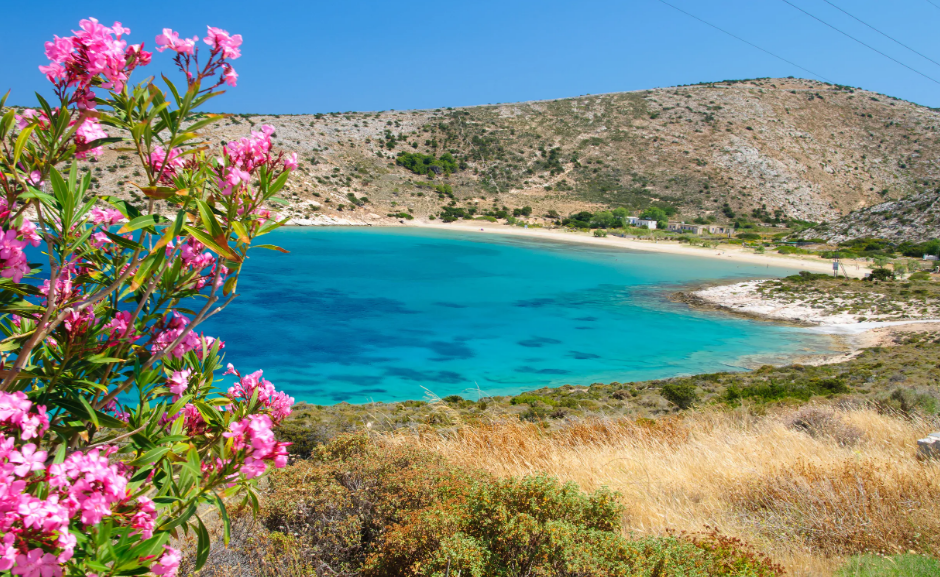

Amorgos is the easternmost of the Cyclades, and it feels it. Where other islands in the group have softened their edges for visitors, Amorgos has remained stubbornly, magnificently itself — dramatic, remote and possessed of a beauty that demands something of you in return.
The Island
Amorgos is long and narrow, stretching roughly 33 kilometres from northwest to southeast. The landscape is dominated by a central ridge of mountains that drops sharply to the sea on both sides, creating cliffs of extraordinary drama. There are three main settlements: Katapola (the main port), Aegiali (the northern port and resort) and Chora (the hilltop capital), each with its own distinct character.
The island became internationally known after Luc Besson filmed The Big Blue here in 1988 — the underwater sequences were shot in the waters off Amorgos, and the film's spirit of elemental freedom feels entirely appropriate to the place.
Sights and Attractions
The Monastery of Hozoviotissa is one of the most extraordinary sights in all of Greece. Built into a sheer white cliff face above the sea in the 11th century, it appears to grow from the rock itself. The interior is small and intimate, tended by a handful of monks who offer visitors a glass of raki and a piece of loukoumades. The climb to reach it is steep but short, and the views from the monastery terrace are unforgettable.
Chora is one of the finest Cycladic capitals — a maze of whitewashed lanes, windmills and a Venetian castle perched at the top. It is best explored in the early morning or evening, when the light is golden and the day-trippers have gone.
The Archaeological Museum in Katapola holds finds from the ancient city of Minoa, including a remarkable collection of Cycladic figurines.
Beaches
Amorgos is not primarily a beach island, but it has some exceptional spots. Agia Anna is the most famous — a small, rocky cove below the Hozoviotissa Monastery with crystal-clear water. Mouros and Kalotaritissa on the west coast are wilder and more remote. Aegiali Bay in the north offers the most conventional beach experience, with calmer water and a sandy shore.
Hiking
Amorgos has some of the finest hiking in the Cyclades. The old cobbled path between Chora and Katapola takes around two hours and passes through terraced fields and ancient ruins. The trail to Stavros on the northeast coast rewards with extraordinary views over the sea to the small islands of the Dodecanese.
Eating and Drinking
The food on Amorgos is honest and excellent. Mouragio in Katapola is the place for fresh fish; Liotrivi in Chora serves traditional mezedes in a beautiful setting. The local spirit is rakomelo — raki warmed with honey and spices — and it is the perfect end to an evening.
How to Get There
Amorgos is served by ferry from Piraeus (around 7–9 hours on the slow ferry, or 5 hours on the fast catamaran). It also connects to Naxos, Paros and the smaller Cyclades. The island has two ports — check which one your ferry uses.
Best For
Amorgos is for travellers who want the Cyclades without the crowds — those who find beauty in dramatic landscapes, are happy to hike between villages and want an island that has not been packaged for easy consumption. It is one of the most rewarding destinations in Greece.
Thinking about Amorgos? Talk to us — we can build it into a Cyclades itinerary that takes in the wilder, less-visited islands.

Written by
The Greeko Team
Greeko has been crafting bespoke Greek holidays for over 25 years. Every article is written from genuine first-hand knowledge of the islands, the culture, and the experiences that make Greece extraordinary.