Kalymnos: The Dodecanese Island That Climbers and Divers Call Home
The world capital of sport climbing, a proud sponge-diving heritage, a colourful harbour town and some of the finest seafood in the Dodecanese. Kalymnos is one of the most characterful islands in Greece.


Kalymnos has two identities, and both are extraordinary. To the climbing world, it is simply the best sport-climbing destination in the Mediterranean — a limestone island of dramatic crags, overhangs and multi-pitch routes that draws athletes from across the globe. To those who know the Dodecanese, it is the sponge-diving island — a place with a seafaring tradition so deeply rooted that the annual departure of the sponge-diving fleet was once the defining event of the island's year. Both identities are genuine, and together they make Kalymnos one of the most characterful islands in Greece.
The Island
Kalymnos sits between Kos and Leros in the Dodecanese, rugged and mountainous, with a dramatic coastline of limestone cliffs and sheltered bays. The capital, Pothia, is one of the most colourful harbour towns in the Aegean — a working port of neoclassical mansions painted in vivid blues, yellows and pinks, with a waterfront lined with seafood restaurants and the smell of the sea.
Rock Climbing
Kalymnos is the world capital of sport climbing. The island's limestone cliffs — particularly around Massouri, Arginonta and Telendos — offer thousands of routes at every grade, from beginner-friendly single pitches to demanding overhangs that attract elite climbers. The season runs from October to May (summer is too hot), and the climbing community that gathers here each autumn is one of the most international and welcoming in the sport.
The Kalymnos Climbing Festival in October is one of the largest climbing events in the world.
Sponge Diving
Kalymnos was once the sponge-diving capital of the world. For centuries, its men dived to extraordinary depths — often without equipment — to harvest natural sponges from the seabed. The tradition is now largely mechanised, but the Nautical and Folklore Museum in Pothia tells the story in extraordinary detail, and natural Kalymnian sponges are still sold throughout the island.
Beaches
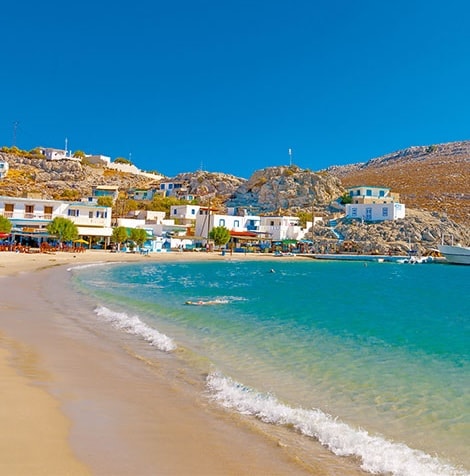
Kalymnos has beaches of real quality. Myrties and Massouri on the west coast are the most popular — long pebble beaches with clear water and views across to the island of Telendos. Emporios in the north is quieter and more beautiful. Vlichadia is a dramatic pebble cove. The tiny island of Telendos — reached by a five-minute boat trip from Myrties — has excellent swimming and a wonderfully unhurried atmosphere.
Eating and Drinking
Pothia's waterfront has some of the finest seafood restaurants in the Dodecanese. Octopus (dried on lines in the sun, then grilled) is the island's signature dish. Fresh fish, lobster and shellfish are all outstanding. The island's honey — produced from thyme and wildflowers — is exceptional.
Weather
Hot and dry in summer (July–August at 30–34°C). The climbing season is October to May. The sea is swimmable from May through October.
How to Get There
Kalymnos has an airport with connections to Athens. Ferries run from Kos (30 minutes), Leros (45 minutes) and Piraeus (Athens), with connections throughout the Dodecanese.
Best For
Kalymnos suits rock climbers above all, but also divers, seafood lovers, families who want a characterful base with good beaches, and anyone who wants the Dodecanese with genuine local identity. It combines naturally with Kos, Leros and Patmos.
Thinking about Kalymnos? Talk to us — we can combine it with Kos, Leros, Patmos or Telendos for a perfect Dodecanese itinerary.
Written by
The Greeko Team
Greeko has been crafting bespoke Greek holidays for over 25 years. Every article is written from genuine first-hand knowledge of the islands, the culture, and the experiences that make Greece extraordinary.