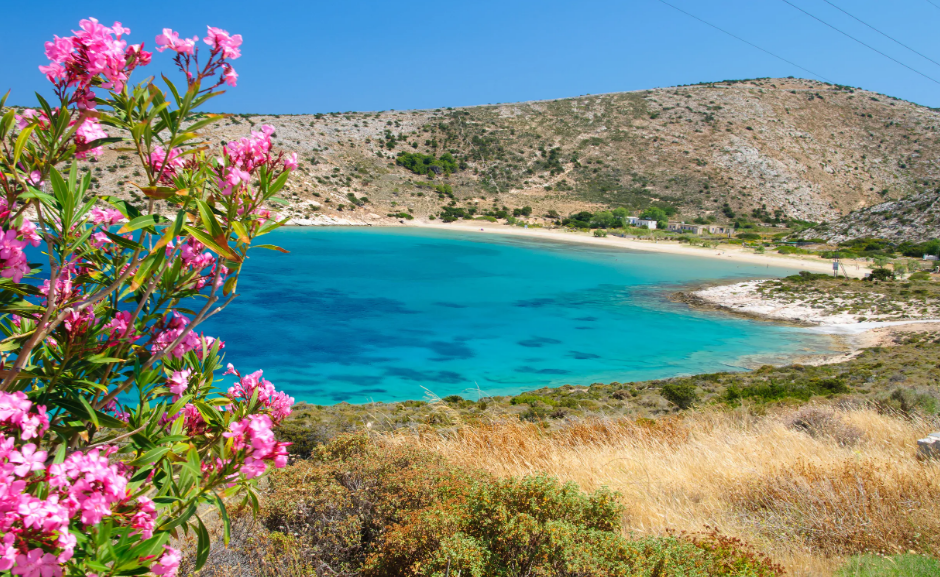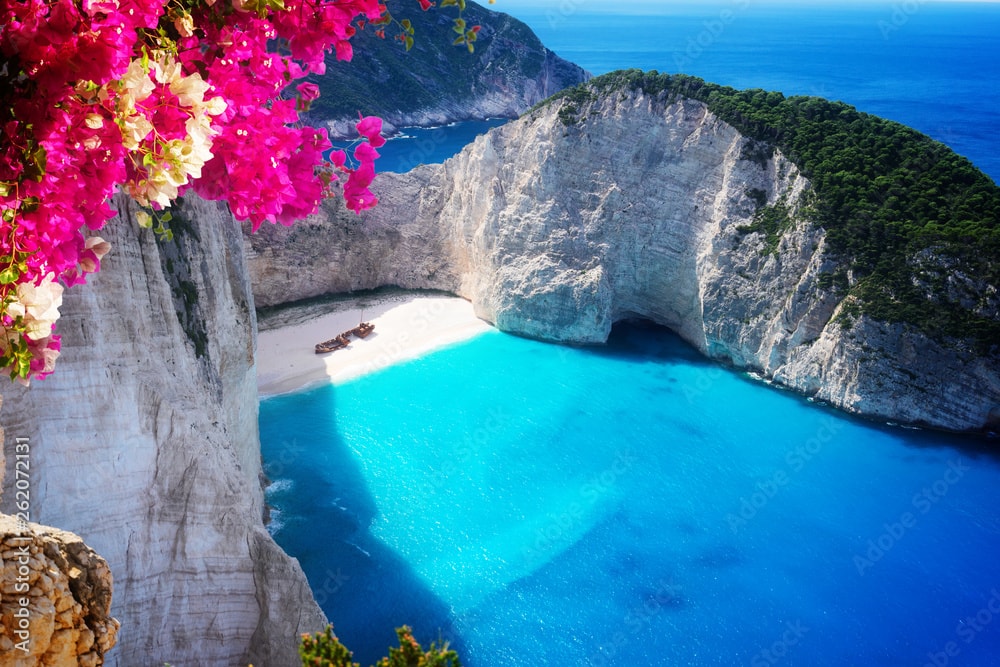

Kythira occupies a unique position in Greek geography and mythology. Administratively part of the Ionian Islands, it sits off the southern tip of the Peloponnese, closer to Crete than to Corfu. Mythologically, it is the birthplace of Aphrodite — the goddess of love is said to have risen from the sea foam off its shores — and the island has a romantic, otherworldly quality that seems to justify the legend.
The Island
Kythira is medium-sized — around 279 square kilometres — with a permanent population of around 4,000 people. The landscape is varied: green and fertile in the north, more arid and dramatic in the south, with a coastline of extraordinary variety — sandy beaches, rocky coves, dramatic cliffs and sea caves. The main settlement is Chora (also called Kythira Town), a beautiful village perched on a cliff above the port of Kapsali.
Sights and Attractions
Chora is one of the most beautiful villages in the Ionian — a maze of whitewashed lanes, Venetian mansions and a magnificent Venetian Castle at the top, with views over the sea in every direction. The Archaeological Museum holds finds from the island's long history, including Minoan and Mycenaean objects.
The Monastery of Moni Myrtidion on the west coast is one of the most important religious sites in the Ionian, housing a miraculous icon of the Virgin. The Waterfalls of Fonissa near the village of Mylopotamos are a remarkable sight — a series of cascades in a lush gorge, with a ruined Venetian mill nearby.
The Cave of Agia Sofia near Kapsali is a large stalactite cave with a small Byzantine chapel inside.
Beaches
Kythira has exceptional beaches. Firi Ammos on the east coast is a long, sandy beach with dramatic red cliffs. Kaladi is a beautiful pebble cove accessible by a steep path. Diakofti on the east coast is the most accessible sandy beach. Limni near Agia Pelagia is a sheltered bay popular with families.
Eating and Drinking
The food on Kythira is excellent — influenced by both the Ionian and Cretan traditions. Skandia in Kapsali is the place for fresh fish; Zorba's in Chora serves traditional Greek cuisine in a beautiful setting. The local honey is exceptional — look for it in the small shops in Chora.
How to Get There
Kythira has a small airport with flights from Athens. By sea, it is served by ferry from Neapoli on the Peloponnese (around 1 hour) and from Piraeus (around 6–8 hours). It also connects to Crete.
Best For
Kythira suits travellers who want a quiet, beautiful island with genuine historical depth — those who enjoy walking, swimming in wild beaches and exploring a landscape that feels genuinely undiscovered. It combines well with the Peloponnese and Crete.
Thinking about Kythira? Talk to us — we can build it into a southern Greece itinerary that takes in the Peloponnese and the Ionian islands.

Written by
The Greeko Team
Greeko has been crafting bespoke Greek holidays for over 25 years. Every article is written from genuine first-hand knowledge of the islands, the culture, and the experiences that make Greece extraordinary.